
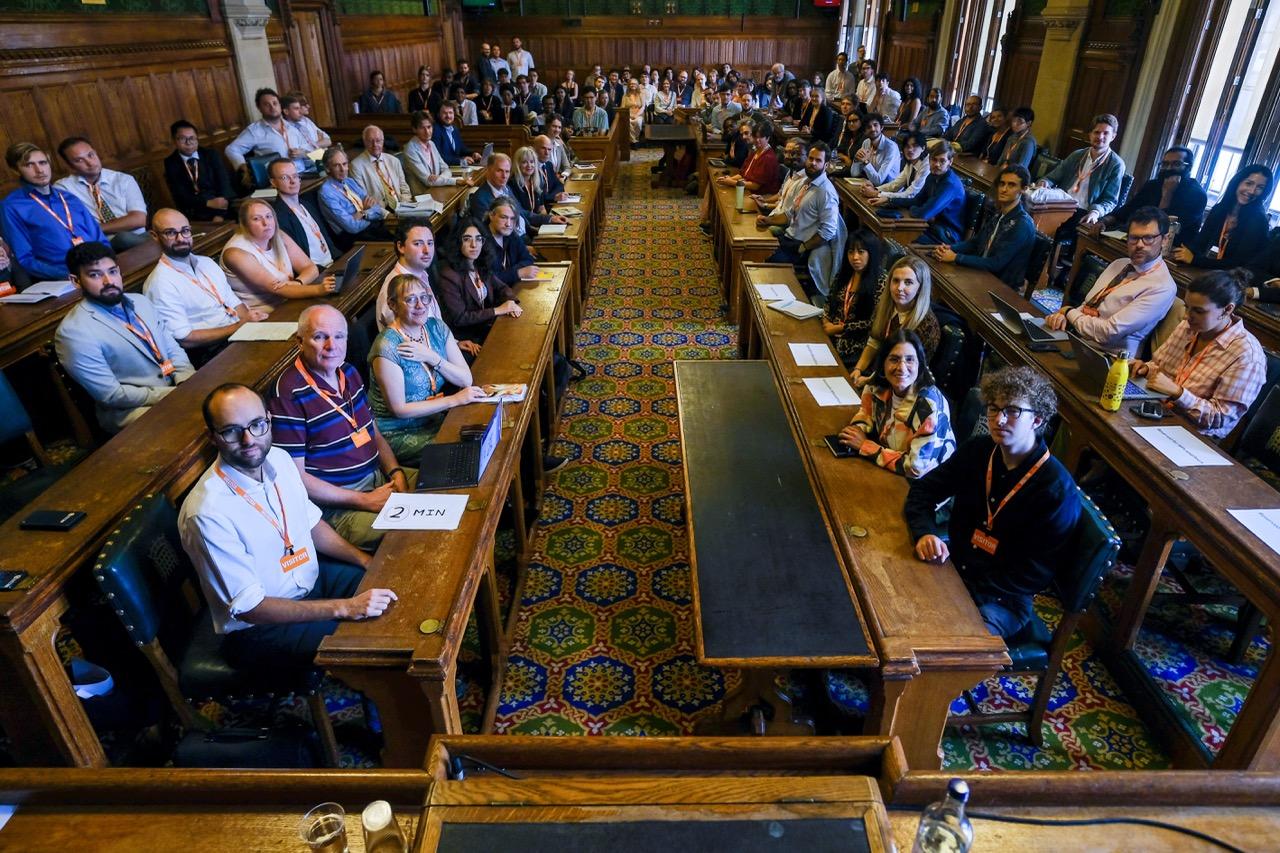
In a week when the catastrophic risks to humanity of AI led the news, PauseAI UK held a special discussion in the Houses of Parliament in which experts and political leaders agreed on the urgent need for government action both in the UK and internationally.
Stuart Russell, Professor of Computer Science at UC Berkeley, argued that although it is hard to believe there is a real risk of AI leading to human extinction, we should think in terms of incompatible kinds of intelligence:
“If you ask gorillas, how are humans going to make you extinct, they haven’t the faintest idea. They can’t conceive of the things that we do that will make them extinct. We cannot conceive of the things that the AI systems will do that will make us extinct”.
The warnings from Russell were stark, with none of the possible futures looking appealing. He sees a “thirty per cent chance of a Chernobyl-scale disaster with trillions of dollars of damage, perhaps millions of deaths”. That would cause a huge backlash against AI.
“I would assume AI companies don’t want that,” Russell continued, “but one of the AI CEOs told me that is currently his best-case scenario because the other scenario is that the catastrophe is irreversible and we lose control. So just to be clear, there is no future that contains both human beings and unsafe superintelligence”.
Brando Benifei MEP, Co-rapporteur and lead architect of the EU AI Act, accepted the reality of existential risks from AI but believed that EU regulation could reduce them: “we have empowered the European Commission to actually enforce our rules for the risk mitigation of the most powerful models and the possibility then to request information, make investigations”.
Benifei was not dismissive of the possibilities of US regulation either, having seen the active concern of some Congressional Republicans who were “from the faction that was not close to the tech bros …They want in fact to conserve human life and they see the vulnerabilities, for example, for children, that’s a very important entry point …to build a discourse”.
Dame Chi Onwurah MP, Chair of the Commons Science, Innovation and Technology Committee agreed that some US mid-term election candidates were speaking out about the dangers of AI but warned of the lobbying power of the tech companies making the argument that “we’ve got to support US AI, otherwise we’ll get Chinese AI”.
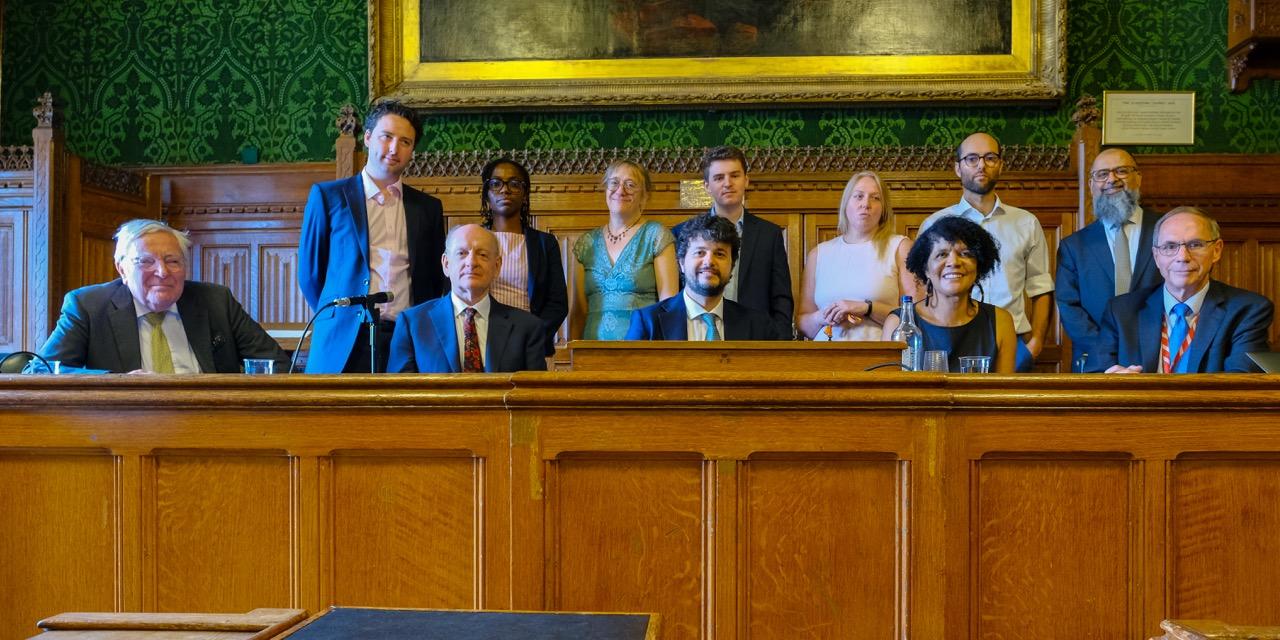
The lack of a government plan for AI regulation “scares the hell out of me”, said Iqbal Mohamed MP, a leading voice in the House of Commons on AI risks. He called for restrictions on the coming stock market flotation of AI companies:
“Multi-trillion-dollar IPOs …shouldn’t be allowed to go ahead without guarantees of the safety of that technology. That should be a prerequisite for these companies getting rich off the risk to the human race and the planet”.
A note of political urgency was injected by Lord Tim Clement-Jones, Co-chair of the All-Party Parliamentary Group on AI, who worried that “we’re not really even having a debate with government about ‘how’, we’re having a debate about ‘whether’, which is quite extraordinary given the authority with which people like Stuart [Russell] speak on this subject”.
The practicalities of AI regulation in the UK were being actively pursued by both members of the House of Lords on the panel, Lord Lionel Tarasenko, a crossbench peer and professor of electrical engineering at Oxford and Lord Clement-Jones.
Lord Tarasenko told the meeting that a promised AI bill in the Labour manifesto had been dropped without explanation and that the Cybersecurity and Resilience Bill currently going through parliament had an “AI-shaped hole” in it which they had both been trying to fill during the Committee Stage of the bill last week.
Lord Clement-Jones added that international standards and international regulation were crucial and that Britain’s AI Security Institute needs to be given powers of inspection and “the absolute power to insist on certain standards being adhered to”.
The discussion showed that politicians were taking seriously the increasingly urgent calls for safety regulation by AI experts. Stuart Russell’s Human Compatible, an early warning of AI dangers, was a book that “we should treat as our gospel”, said Lord Clement-Jones.
“We’re plugging away”, he said, “but we have a really a huge mountain to climb until the government actually responds in a much more effective way”.