
“This is the ‘Oppenheimer moment’ of our generation”
– Austrian Federal Minister for European and International Affairs, Alexander Schallenberg
Force is the universal tool of political control. Whoever commands the military commands the state and holds the power to shape society.
Control of the military and hence power over human life must remain in the hands of experienced military leaders, not the decision of a cold-blooded machine.
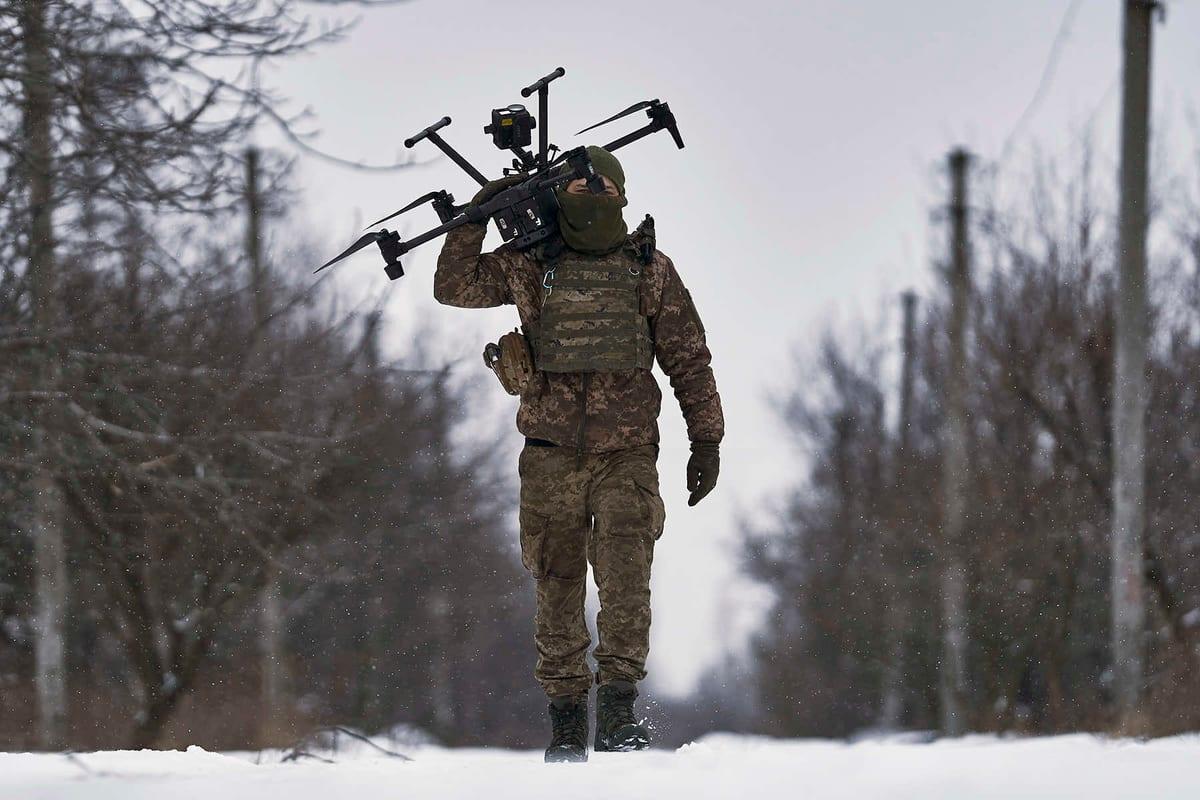
Artificial Intelligence is currently being woven into the fabric of global superpowers’ militaries, infecting armies across the world with an extreme concentration of power never seen before in human history.
14 May 2025, Law and Crime Prevention
UN Secretary-General António Guterres has once again called for a global ban on lethal autonomous weapon systems – machines capable of taking human lives without human oversight – describing them as “politically unacceptable” and “morally repugnant.”1
How do we protect future generations and the values that shape civilization?
Dangerous weapons capable of mass destruction are not a new concept to the world; parallels can be drawn between nuclear weapons and lethal autonomous weapon systems (LAWS). Daniel Ellsberg, a military analyst from the cold war commented: “Alain Enthoven and I were the youngest members of the department. Neither of us joined the extremely generous retirement plan RAND offered. Neither of us believed, in our late twenties, we had a chance of collecting on it.”2
We have not yet eradicated WMDs but there has been progress. The methods policymakers and activists used to prevent nuclear apocalypse could teach us how we can build a safer, stable society in the defiance of modern autonomous weapons systems.
Using ICAN’s timeline of the history of nuclear weapons, I characterised key steps towards progress into 5 categories:3
- Negotiations between Elites: In 1986, Gorbachev and Reagan sat across from each other in Reykjavik, discussing the future of their nations. Despite the two leaders’ mutual frustration and there being no immediate effect on the dissolution of WMDs, this was a core and necessary stepping stone towards category 2, below.
- Major Policy Implementation: 1987 oversaw the Intermediate-Range Nuclear Forces Treaty. A historic piece of policy and an agreement between two super powers banning the majority of the USSR and USA’s nuclear and conventional ground-launched ballistic missiles, cruise missiles, and missile launchers. Major policy implementation when successful is an undeniably powerful force for the good of humanity in the case of WMDs.
However, success is rare.
In 2019, Trump officially pulled out of the Intermediate-Range Nuclear Forces Treaty citing alleged lack of Russian adherence to its contents.4 Other treaties proposed by the United Nations such as the Comprehensive Nuclear-Test-Ban Treaty were limited by their own ambition, meaning key states did not agree and some which claimed to, ignored it anyway continuing testing in limited or secretive contexts instead.
History suggests a more effective kind of policy is a high quantity of less idealistic minor policies.
- Minor Policy Implementation: Some of the greatest and most influential steps towards nuclear disarmament lie in this category. This comes from how these minor policies were realistic and aligned with local interests.
The Antarctic Treaty (December 1, 1959) prohibited testing of nuclear weapons on the continent. This created a precedent in nuclear policy history, a recognised public state declaration of dedication towards a path of scientific research and peace. The major success of this policy has meant the planet’s icy south has not seen any nuclear testing in the entire 65 years this policy has been in place. This success set a precedent and likely indirectly led to the Treaty of Tlatelolco: a treaty committing Latin America and the Caribbean to also be nuclear-weapon-free-zones. Despite the exception of Cuba, this too was a success and set further precedent leading to similar treaties being established in Africa, the South Pacific and South-East Asia. Although these treaties did not largely target areas in which states already possessed nuclear weapons, it meant WMDs could not be tested in these areas, preventing local communities from becoming the playgrounds of superpowers to test their nuclear toys.
- Civil Mobility and Public Engagement: Policy does not move without public pressure. In 1958, the UK disarmament campaign formed. Its iconic emblem became one of the most widely recognized symbols for nuclear safety in the world. And in 1982, one million people gathered in New York City’s Central Park in support of the nuclear freeze movement. It is the largest anti-war demonstration in history. The mounting pressure was likely a key factor which led to Reagan making core policy decisions. These are just a few of the numerous examples of public engagement which placed the pressure on policymakers to fight for nuclear disarmament.
But what provoked the public to rise to action?
- Intellectual and Moral Foundations: the Russell-Einstein Manifesto kick-started the disarmament movement. It represented a clear, scientifically grounded, public argument signed by Nobel laureates. It is the first turning point ICAN references in the path away from mass destruction and towards nuclear safety. It gave protesters something to march behind and policymakers grounds to act. Nuclear safety was no longer able to be ignored.
Do LAWS, or “killer robots” have any equivalence to these 5 categories? I compared ICAN’s timeline of nuclear weapons to the ‘Stop the Killer Robots’ timeline of LAWS progress below.5
What elite negotiations have taken place?
Over 144 countries attended a conference in Vienna in 2024, titled ‘Humanity at the Crossroads: autonomous weapons and the challenge of regulation.’ Consensus grew amongst member states about the moral reprehensibility of autonomous weapons systems. However, this has not translated into major policy implementation like the effects of Gorbachev and Reagan’s discussions.
Major states have opposed treaties and bans on autonomous weapons such as Russia which demands all discussions regarding LAWS are held within the UN Convention on Certain Conventional Weapons. This requires consensus among states to pass agreements and so Russia is able to block progress through its veto power. Although 161 states at the UN General Assembly voted against the killing machines, a small number of highly-militarised states demanded significant changes to the resolution which drastically reduced its scope.
The lack of unity and equal concern for disarmament of LAWS is a key factor which has prevented progress and was not present with nuclear policymakers such as Gorbachev and Reagan.
Once again Latin American and Caribbean states have been leading the way in minor policy implementation. In 2023, 33 states issued a communique demanding “the urgent negotiation of an international legally binding instrument on autonomy in weapons systems,” the first regional statement to take place outside of a UN setting. However, unlike with nuclear weapons, LAWS do not require land to be tested and as these countries are not key developers of these weapons, this will have limited effects.
Civil mobility has been taking place: the Campaign to Stop Killer Robots comprises over 250 organisations across 70 countries. Nobel Peace Laureates, the Dalai Lama and multiple Popes have shown their support.
In 2018, more than 200 technology companies pledged never to develop autonomous weapons. Unfortunately, in February 2025, Google, one of those signatories, quietly reversed its pledge.6 However, protests from OpenAI’s employees were able successfully to make Sam Altman agree to changes within his deal with the Pentagon to prohibit use of domestic surveillance using technology from OpenAI.7 The movement exists and is making some progress with mixed results. Unfortunately, many of these protests and civil mobility takes place amongst the intellectual elite, those who have inside knowledge of Artificial Intelligence that is not accessible to the wider public. In other words, the civil mobility does not have comparable reach or scope of that which nuclear safety has.
On intellectual and moral foundations, there have been statements. The 2016 FLI autonomous weapons open letter gathered over 34,000 signatures from AI and robotics researchers. Signatories were established and recognised scientific, public figures such as Stephen Hawking, Elon Musk, Steve Wozniak. Arguments have been made, clearly and by credible and notable voices. Yet these letters have not seemed to produce momentum in the same way that Russell’s Manifesto was able to.
A key factor which undermines each of these categories stems from LAWS being an entirely distinct type of technology to Nuclear Weapons, many people do not understand them and so do not care with the kind of fervour which propelled the nuclear safety movement. Given this, we are left an uncomfortable question.
Must we wait for Hiroshima?
The horrors of Nagasaki were required to prompt Russell to begin writing about the necessity of Nuclear safety. The image of the mushroom cloud haunts perception of the Second World War and WMDs where the catastrophic and dystopian effects of the ideas of scientists were made unforgettable to the world. It is undeniable that these factors were a large reason there was momentum behind the nuclear safety movement when Russell published his Manifesto.
Artificially Intelligent warfare is by design, invisible and deniable. Unbeknownst to many, 2020 saw the likely first deployment of autonomous weapons, when a drone may have tracked down and killed a human target in Libya without human instruction, according to a UN report.8 This was just news for a day and remains unknown by many. It is hard to protest against something that cannot be easily pictured. Fear towards LAWS seems to be concentrated amongst those with insider knowledge, making it inaccessible for the wider public to feel.
What will it take to make autonomous weapons undeniable and unforgettable? Perhaps we need something catastrophic which will make superpowers stop hiding from behind their vetoes and make everyday people able to see the danger being dangled in front of them.
But Hiroshima and Nagasaki horrified a world which allowed its citizens to feel the freedom of horror. We cannot afford to wait for the 1945 equivalent in LAWS, the extreme power concentration within these machines will allow them to execute swiftly. By then it will be too late.